
When it comes to running an efficient, productive operation, few pieces of equipment are more essential than a reliable forklift. Whether you’re moving goods in a busy warehouse in Birmingham, unloading deliveries at a factory in Wolverhampton or working on a construction site in Coventry, having the right type of forklift for the job makes all the difference. Forklifts4U, as trusted West Midlands forklift experts, understand that choosing the right machine is not just about lifting power or price — the fuel type plays a crucial role too.
LPG forklifts have become a favourite across industries because they offer flexibility, quick refuelling and lower emissions than diesel alternatives. But not every forklift suits every job, and not every job is right for LPG. Let’s explore the different forklift types you’re likely to come across and what they’re best used for, with a closer look at where LPG forklifts come into their own.

Understanding Counterbalance Forklifts
When most people picture a forklift, it’s the counterbalance model that comes to mind. It’s the workhorse of the forklift world, found in countless warehouses, factories and yards throughout the West Midlands. A counterbalance forklift has a straightforward design with forks at the front and a weight at the back to balance the load. This simple concept is what makes it so versatile.
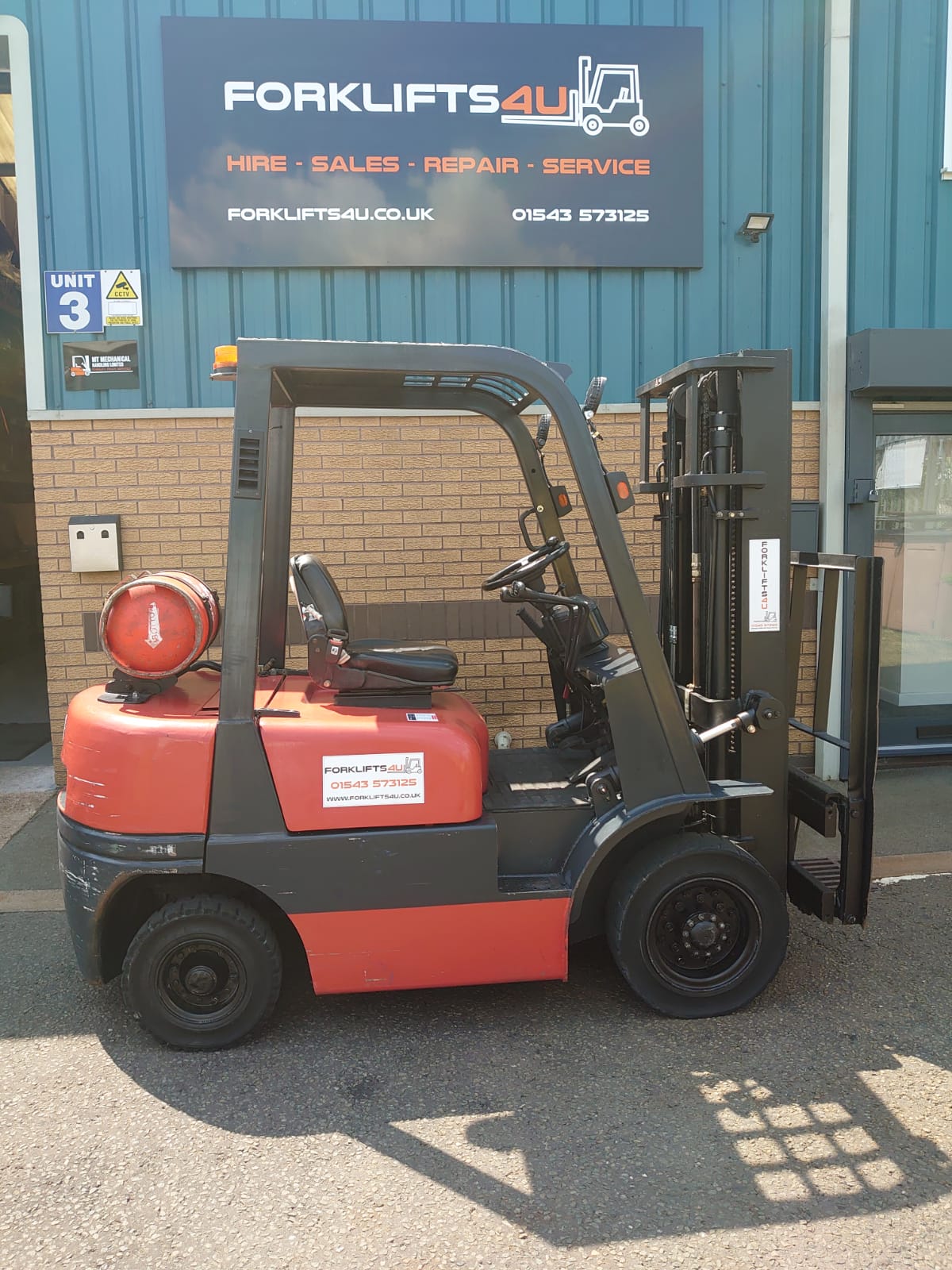
LPG-powered counterbalance forklifts are especially popular. Their biggest strength is the ability to switch easily between indoor and outdoor work. Many businesses in the region use them to move goods from lorries in the yard to storage inside the warehouse, all without worrying about long charging times or the fumes associated with diesel. LPG models produce fewer harmful emissions, making them better suited for indoor use than diesel equivalents.
Counterbalance forklifts are available with three or four wheels. Three-wheel versions offer tighter turning circles, making them ideal for working in narrower spaces or when storage racking is close together. Four-wheel versions provide greater stability when lifting heavier or bulkier loads. With LPG as the fuel source, operators enjoy consistent power levels throughout a shift and the peace of mind that refuelling takes just minutes rather than hours.
Reach Trucks and High Racking Solutions
When storage space is at a premium, reach trucks come into play. Designed to operate in narrow aisles and lift loads to significant heights, they’re the go-to option for busy warehouses that want to maximise vertical storage.
Traditionally, reach trucks are electrically powered. The battery-operated design helps keep emissions to zero, which is ideal when working in enclosed areas with minimal ventilation. However, there are plenty of situations where businesses instead rely on LPG counterbalance trucks to cover similar tasks, especially if they need the extra flexibility to handle loading and unloading outdoors.
This approach can be seen in some older warehouses or mixed-use facilities across the West Midlands, where the building layout means a pure reach truck might not be practical for every load. LPG forklifts can bridge that gap by providing good lifting capacity, quick refuelling and enough power to tackle outdoor yard work before manoeuvring into warehouse aisles that are not ultra-narrow.

Pallet Trucks and Stackers for Lighter Loads
Pallet trucks and stackers may not always steal the spotlight, but they’re a vital part of daily operations for many businesses. Pallet trucks are designed for moving loads at ground level and come in manual or electric variations. Stackers offer a bit more versatility by allowing operators to lift pallets to a convenient working height or onto low racking.
Electric pallet trucks and stackers dominate this segment because they’re compact, quiet and well-suited for indoor use. That said, some operations prefer small LPG forklifts instead of dedicated pallet trucks when there’s a need to move loads across mixed environments.
A small LPG counterbalance truck can do double duty, shifting heavier pallets outdoors before transferring them to indoor staging areas. This reduces the need for multiple machines, which is especially helpful for businesses working with tighter budgets or space constraints.
Rough Terrain Forklifts for Challenging Environments
Not every job takes place on a smooth concrete floor. Construction sites, farms, garden centres and builder’s yards often need to move materials across uneven or muddy ground. That’s where rough terrain forklifts step in.
These machines are built with sturdy tyres, robust suspension and higher ground clearance to tackle slopes, gravel, mud and other tricky surfaces. Diesel is the most common fuel type for rough terrain forklifts due to the raw power it delivers. But in certain situations, LPG can be a smart alternative.
Some sites in the West Midlands, particularly semi-enclosed yards or indoor-outdoor lumber facilities, prefer LPG rough terrain forklifts because they produce lower emissions than diesel models. This helps keep air quality in check, especially when forklifts need to move in and out of warehouses, greenhouses or partially covered structures.
Refuelling speed is another advantage. On busy sites, time is money, and LPG tanks can be swapped or refilled quickly, minimising downtime. For businesses that handle both rugged yard work and indoor storage, LPG rough terrain forklifts provide the flexibility to do both.
Multi-Directional Forklifts and Sideloaders for Long Loads
Industries dealing with awkward or oversized loads know that standard forklifts aren’t always up to the task. Timber merchants, steel fabricators and plastics manufacturers often handle long, heavy items that need careful manoeuvring.
Multi-directional forklifts and sideloaders are the answer. These machines are designed to pick up and transport long loads safely and efficiently, often through tight spaces where turning a traditional forklift would be impossible.
In these applications, fuel choice is important. LPG-powered multi-directional forklifts and sideloaders are common because they offer the muscle needed to handle demanding loads while keeping emissions low enough for indoor use. The West Midlands is home to many industrial estates where indoor and outdoor spaces blur together. In these mixed settings, LPG machines help teams maintain productivity without worrying about fumes or extended charging times.
Articulated Forklifts for Narrow Aisle Operations
Another clever solution for maximising storage capacity is the articulated forklift. Sometimes known as a flexi or bendi truck, this machine combines the benefits of a counterbalance forklift with the narrow-aisle capability of a reach truck. Its flexible mast pivots, allowing operators to navigate tight aisles and pick from high racking without needing expensive warehouse redesigns.
Electric versions are widespread, but LPG articulated forklifts have carved out a niche for businesses that want longer run times and fast refuelling. For warehouses that need to operate around the clock, an LPG articulated forklift can be topped up in minutes, ensuring there’s minimal disruption during peak demand.
Forklifts4U has seen many customers across the West Midlands adopt this hybrid approach when they want the best of both worlds — efficient aisle navigation plus the power and convenience of LPG.
The Advantages of LPG as a Forklift Fuel
There’s a good reason why LPG forklifts remain so popular for businesses that straddle the line between indoor and outdoor work. Compared to diesel, LPG burns cleaner, producing fewer particulates and harmful gases. This makes it safer for enclosed spaces, while still delivering the torque and lifting power needed for demanding tasks.
One of the biggest advantages of LPG is the refuelling process. Unlike electric forklifts that need long charging times, an LPG tank can be replaced or refilled in a matter of minutes. For companies running multiple shifts or seasonal peak operations, this can be a real game-changer, keeping goods moving without costly downtime.
LPG forklifts also offer flexibility when it comes to storage. Fuel cylinders are relatively easy to store safely on-site with the right precautions and can be ordered in bulk, ensuring you never run out when demand spikes.
Many businesses in the West Midlands choose LPG as a middle ground. It’s not as emissions-free as electric, but it’s cleaner than diesel and far more adaptable when your work takes you beyond the warehouse floor. For mixed-use sites, builders’ yards, or any facility that can’t afford to stop while batteries recharge, LPG makes practical sense.
When an Electric Forklift Might Be the Better Choice
While LPG forklifts bring plenty of benefits, there are scenarios where electric models can be the better option. Fully indoor operations with sensitive products, like food storage or pharmaceutical warehousing, often favour electric trucks to maintain the highest air quality.
Electric forklifts are also extremely quiet. This can make a difference in workplaces where noise levels matter for health and safety, or where operators need to communicate clearly over the sound of machinery.
Another factor is sustainability. For companies with strong environmental commitments, electric forklifts powered by renewable energy offer the lowest carbon footprint. Though they take longer to charge, improvements in battery technology are closing the gap, and some operations run their fleets on a rotation so there’s always a charged truck ready to go.
Forklifts4U can help businesses weigh up these considerations and decide if LPG or electric — or a combination of both — will deliver the best results.
Supporting Local Businesses with the Right Forklift Solutions
At Forklifts4U, we understand that every business is different. A family-run warehouse in Cannock might have very different needs compared to a manufacturing site in Solihull or a logistics hub on the outskirts of Walsall. The layout of your premises, the type of loads you handle, the shift patterns you run and your environmental priorities all come into play when choosing a forklift fleet.
What unites so many West Midlands businesses is the need for reliable, flexible equipment that keeps goods moving and staff safe. LPG forklifts continue to be a top choice because they strike a balance that works well for mixed-use sites, multi-shift operations and companies that want power and performance without the emissions and noise of diesel.
Forklifts4U is proud to be the trusted partner for so many local companies, providing not only high-quality LPG forklifts but also expert advice, maintenance and ongoing support. Our team takes the time to understand your operation, recommend the right equipment and make sure it stays in peak condition for years to come.
Whether you’re expanding your fleet, replacing an old workhorse or exploring the switch to LPG for the first time, you’ll find that the right forklift can transform your day-to-day operations. From counterbalance trucks and reach trucks to rough terrain models and specialist solutions for long loads, our local knowledge means you get a forklift that’s ready for the job, every time.
Forklifts4U is here to keep your business moving — safely, efficiently and with the confidence that comes from working with West Midlands forklift experts who know what really works on the ground. If you’re ready to discover the difference that the right LPG forklift can make, get in touch with our friendly team and we’ll help you find the perfect fit for your needs.